
Not every conversation happens one-on-one.
Some work requires teams to come together, review progress, and make decisions as a group.
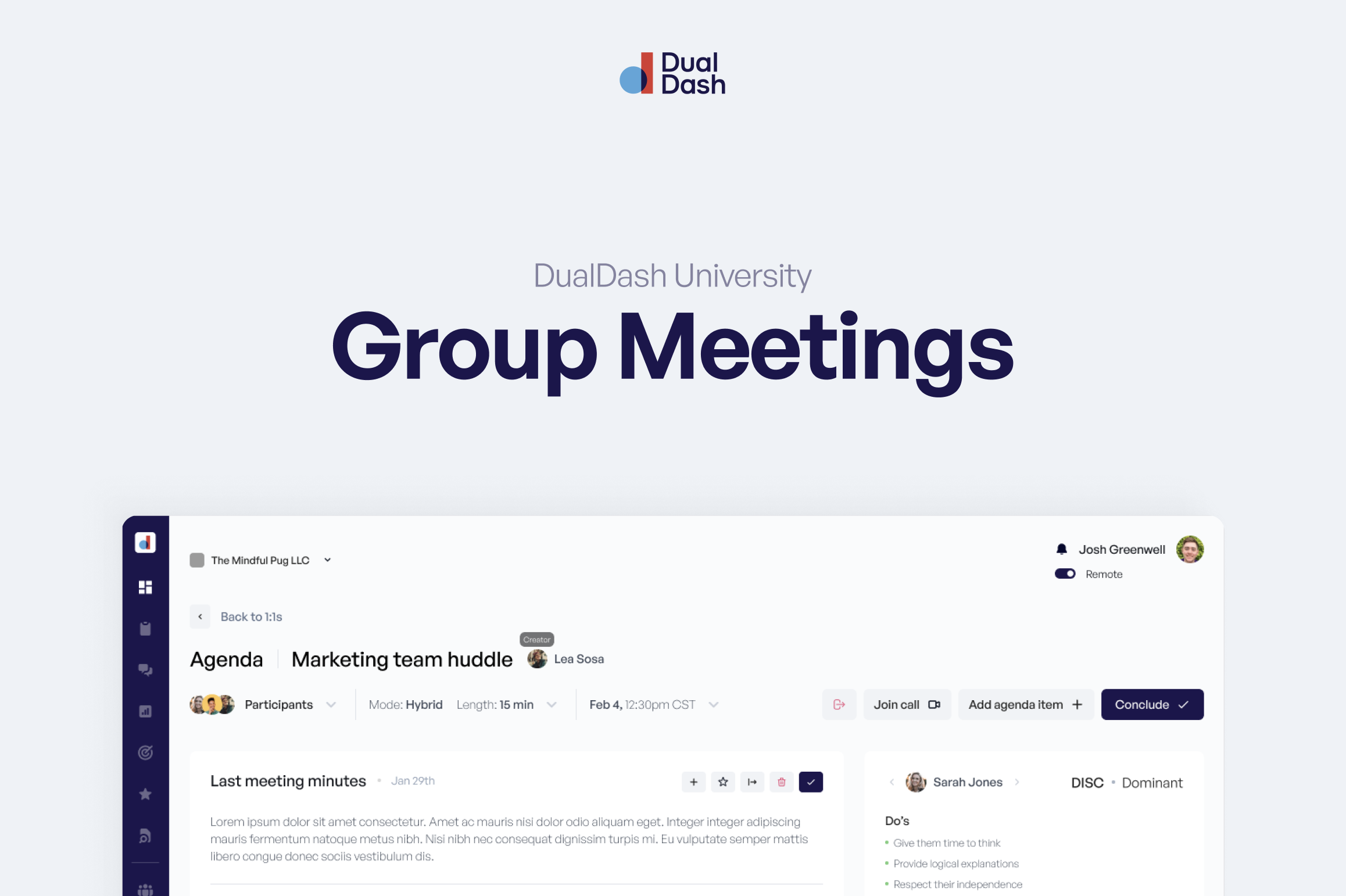
Group Meetings in Dual Dash help teams run structured, productive conversations.
These meetings are designed to be ongoing and recurring, not impromptu.
They are commonly used for:
• team huddles
• leadership meetings
• department check-ins
• monthly operating reviews
• project coordination
Like 1:1 meetings, Group Meetings focus on clear agendas, productive discussion, and actionable outcomes.
Before the Meeting
Build the Agenda Together
Group Meetings use a collaborative agenda.
Participants can add discussion topics ahead of time so everyone arrives prepared.
Topics may include:
• updates on priorities
• operational challenges
• new opportunities
• decisions that need input
• information the team should know
Preparing topics in advance helps meetings stay focused and productive.
Start with Previous Commitments
Every Group Meeting begins by reviewing previous commitments.
This helps the team quickly see:
• what actions were completed
• what still needs attention
• what progress has been made since the last meeting
Starting with commitments creates accountability and momentum from one meeting to the next.
During the Meeting
As the team works through the agenda, each discussion topic can be tagged based on its purpose.
Topics may be labeled as:
• Decision — the team needs to make a choice
• Input — the team is gathering feedback
• Informative — the topic is being shared for awareness
This helps everyone understand the goal of the conversation.
When a decision is required, teams can use voting to capture consensus.
Along the way, teams may also:
• record key notes
• capture action items
• align on next steps
After the Meeting
Once the meeting is concluded:
• action items remain visible
• commitments carry forward into the next meeting
• notes document the discussion
Over time, this creates a clear record of decisions and progress.
Instead of relying on memory, teams can see how conversations turn into results.
Why Group Meetings Matter
Strong teams build rhythm.
Regular group conversations help organizations:
• stay aligned on priorities
• solve problems together
• make decisions faster
• follow through on commitments
When meetings are structured well, they become a powerful tool for leadership and collaboration.
What’s Next
Now that you understand how Group Meetings work, you can explore the tools that power these conversations.
Next, learn about Agenda Objects, which help teams organize discussions, track commitments, and turn meetings into action.
